
We have locally developed a leaflet covering all the rules and specificities of printing.
You will find the digital versions below. If you need a paper version, they are available on request to your favorite project manager 😉
French version :
Dutch version :
The support
There is a wide range of materials available for your projects. We’ll describe the principal ones used for print below.
Paper
- Typology: Coated paper (matte, satin, gloss), Uncoated (offset)
- Paper weight (thickness): Calculated in « M » or in « LBS » or in Points
- FSC / PEFC certifications
Large format materials
- Vinyl: banner (13oz to 20oz) / sticker (transparent or not) / Mesh
- Fabrics (stretchable or non-stretchable)
- Styrene / Polypropylene / Foamcore / Gatorfoam
Cardboard
- White or kraft
- Thickness (single flute to triple flute)
Offset printing inks
Offset presses use 4 basic “Process” ink colors
CYAN
MAGENTA
YELLOW
BLACK
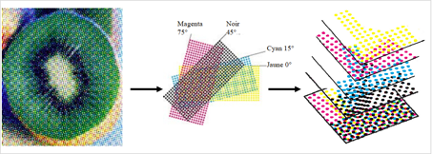
These 4 printed colours, superimposed at different angles, are used to reproduce the majority of colours and hues in a printed document.
➔ They are printed in a grid calculated in lines per inch (LPI).
➔ The higher the screen, the clearer the definition..
➔ The frame defines the resolution of a document in ½ ratio. A 150 lpi frame requires an image resolution of 300 dpi.
Pantone Matching System (PMS)
➔ There are several Pantone colour charts to determine a specific colour ink that cannot be reproduced in the process, such as “Coca Cola” Red (PMS 2347), “John Deere” Green (PMS 364).
Digital printing inks (Small print and Large format)
Digital presses use 6 to 12 basic ink colors:
- Cyan
- Light cyan
- Magenta
- Light magenta
- Yellow
- Orange
- Red
- Green
- Black
- Etc.
Some digital presses can use PMS or varnish.
Finishes
There are a multitude of possibilities. Below are presented the main finishes used:
The « offset » or press varnish : an aqueous or protective varnish that is low-cost and applied in-line. It will help protect and enhance your final printed product.
➔ Gloss / silk / matte
Acrylic varnish : provides a very good value and results in a high-quality visible varnish. However, it cannot be used for shorter print runs that are printed digitally. It is also an environmentally friendly product.
➔ Gloss / silk / matte
UV varnish : a rich, glossy varnish, it can be applied to certain graphic elements or to the whole product, and can be highly effective with image-rich projects.
➔ Gloss / matte / 3D / textured / glitter
Hot Stamp : Gold / silver / clear / specific color
Lamination : a thin transparent plastic sheet or coating that provides protection against liquid and heavy use.
➔ Gloss / silk / matte / scuff free / softouch
Debossing : is when an image (logo, text, etc.) is imprinted into your print piece, creating a depressed effect. Just like embossing, you can choose to leave the debossed area untouched or fill it in with ink or foil stamping.
Embossing : is when a pattern is raised against the background. This is done by using a metal die, which is applied from underneath the stock.
Foldings & cuts
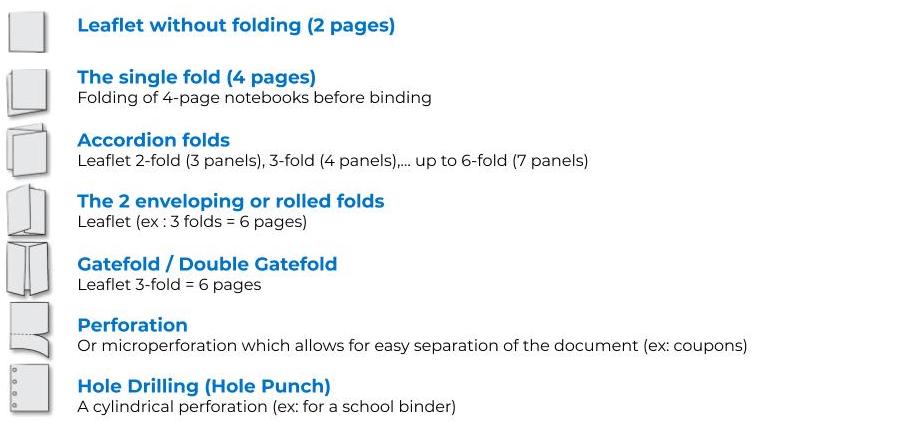
The most common folding and cutting techniques are:
The binding
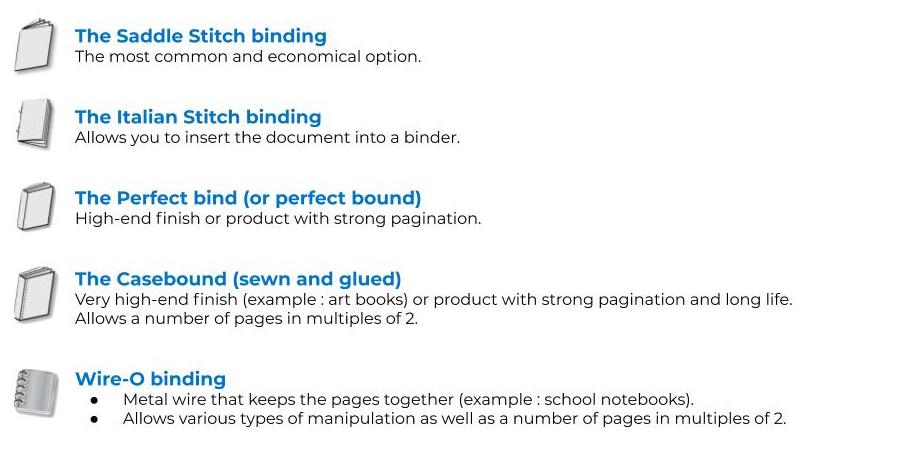
The main binding methods are:
Packaging
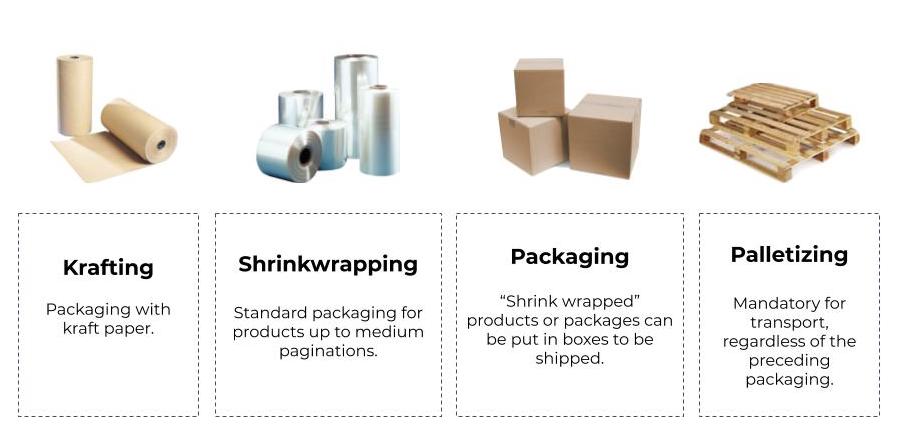
It is important to choose the right packaging for your product
Packaging & delivery
Finally, the last two steps are necessary to regulate packaging and delivery. All specifications, nomenclature and special instructions are listed in the document Rules for the Identification and Shipping of Merchandise drafted by L’Oréal Benelux:
Packaging:
Per unit or by quantity :
- Kraft paper or rubber bands
- Packages in shrinkwrap or not
- Packaging in boxes
- Palletizing
Delivery:
Follow customer specific guidelines
- Directly to warehouse
- Directly to branches
- Directly to a copacker
Constraints :
- Delivery appointments
- Timetable
- Very specific directives
